The French Riviera has hosted some of the most iconic weddings in history — and for good reason. Clifftop villages above a turquoise sea, century-old olive groves, Belle Époque architecture, and a light that photographers dream about. If you’re considering a destination wedding on the Côte d’Azur, this guide covers everything you need to know: the best areas, realistic costs, legal steps for foreigners, when to go, and why working with a local English-speaking planner changes everything.
Why the French Riviera Is One of the World’s Great Wedding Destinations
Few places in the world combine natural beauty, cultural richness, and logistical infrastructure the way the French Riviera does. The 120-kilometre stretch of coastline between the Italian border and Cassis offers an extraordinary variety of settings: sun-drenched beaches, medieval hilltop villages, glamorous harbor towns, and lush vineyard estates — all within easy reach of Nice Côte d’Azur International Airport, one of France’s busiest hubs.
Beyond scenery, the Riviera has a mature wedding industry. Vendors here — florists, caterers, photographers, château owners — work with international couples regularly. English is widely spoken in the professional hospitality sector. The regional cuisine (Provençal, Mediterranean, French fine dining) is world-class. And the infrastructure to bring in guests from the US, UK, Australia, and beyond is excellent.
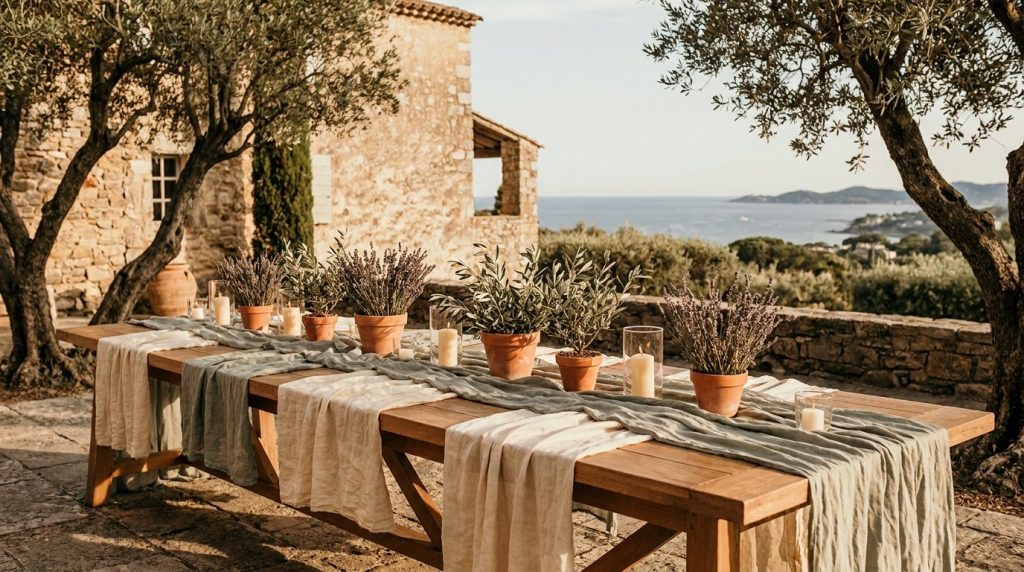
The Riviera also sits close to Provence, which offers a different aesthetic — lavender fields, mas farmhouses, a more rustic palette. If you’re weighing both options, read our comparison: Provence vs French Riviera: which is right for your wedding?
The Best Areas for a Riviera Wedding
The Côte d’Azur isn’t a monolith. Each town has its own personality, price point, and logistical profile. Here’s how the main areas break down.
Nice
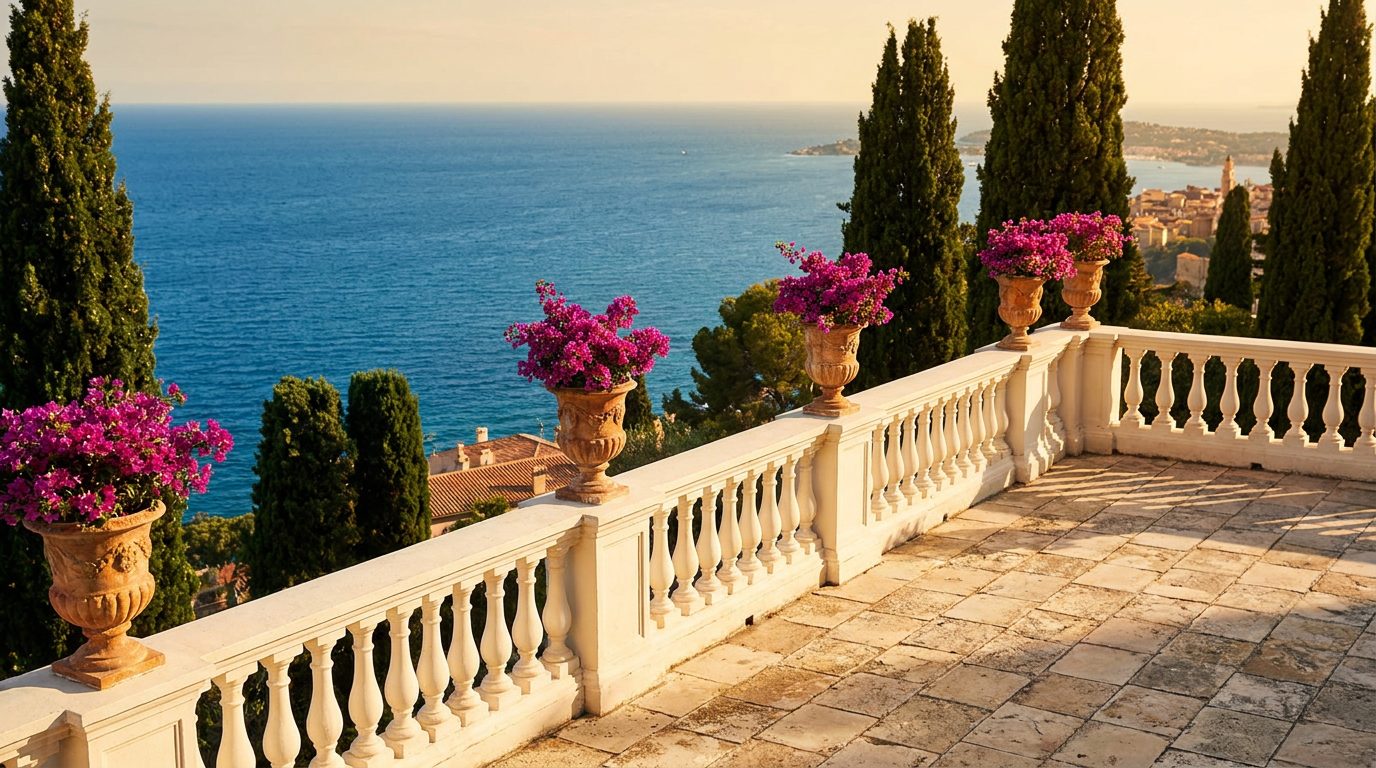
Nice is the regional capital and the most practical base for a Riviera wedding. The airport is 20 minutes from the city center. The historic Old Town (Vieille-Ville) offers romantic backdrops, and the surrounding hills are dotted with villas and estates. Nice attracts couples who want urban sophistication alongside Mediterranean scenery — rooftop venues, Belle Époque hotels, garden estates above the Baie des Anges.
Cannes
Cannes is synonymous with glamour. The Croisette, the old port, the hills of Super-Cannes — every corner is designed for spectacle. Venues range from grand palace hotels to private villas with panoramic sea views. The Lérins Islands, a short boat ride from the port, offer an extraordinary ceremony setting. See our guide to the best Riviera wedding venues for properties we recommend in and around Cannes.
Saint-Tropez
Saint-Tropez is in a category of its own — exclusive, high-summer, and operationally complex. Access is by road (congested in July–August) or by boat. Venue options include legendary beach clubs, Provençal mas estates, and private villas with infinity pools. If Saint-Tropez is calling you, read our dedicated piece: Getting married in Saint-Tropez: what you need to know.
Antibes and Cap d’Antibes
Antibes offers a quieter, more authentic alternative to Cannes, just 15 minutes away. The Cap d’Antibes peninsula has some of the Riviera’s most spectacular private estate venues, with mature gardens dropping to private sea access. It’s a favourite among couples who want luxury without the paparazzi energy of Saint-Tropez.
Èze and the Corniche Villages
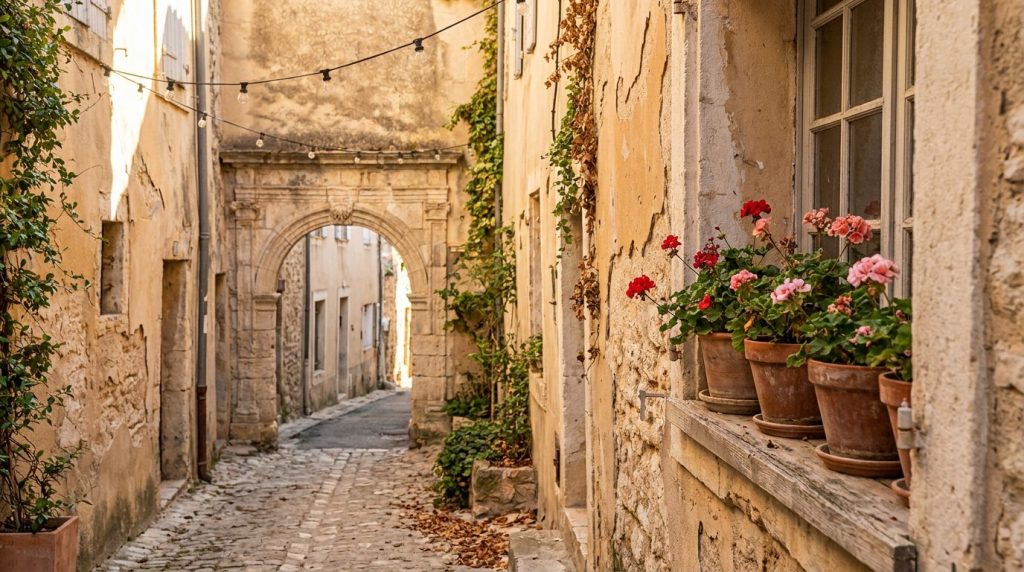
Èze, Roquebrune-Cap-Martin, and Gorbio perch above the sea at vertiginous heights. These hilltop villages are visually stunning but operationally demanding — access is narrow, guest transport needs careful coordination, and most venues are intimate (20–60 guests). Perfect for elopements and small ceremonies.
Average Wedding Costs on the French Riviera
Budget is one of the first real constraints couples face, and the French Riviera sits at the higher end of European destination wedding markets. Full budget breakdown: how much does a destination wedding in France cost? covers the numbers in detail, but here’s a realistic overview for the Riviera specifically.
Venue hire: €5,000–€40,000+ depending on property, exclusivity, and season. Château and villa buy-outs for a weekend sit in the €15,000–€30,000 range for mid-tier properties; trophy venues in Saint-Tropez or Cap d’Antibes can exceed €80,000.
Catering: €150–€350 per person for a full sit-down dinner with wine. A 60-guest dinner lands at roughly €12,000–€20,000 for food alone.
Photography and video: €3,000–€8,000 for a high-quality international or local team.
Flowers and décor: €5,000–€20,000 depending on scale and style. Riviera florists are exceptional but not cheap.
Entertainment: DJ from €1,500; live band from €4,000.
Wedding planner fees: 10–15% of total budget, or a fixed fee from €5,000 for partial planning.
Total realistic budget: A 60-guest Riviera wedding, fully catered, with a good venue and quality vendors, typically starts at €60,000–€80,000. Larger or more exclusive events run €100,000–€200,000+.
These numbers are higher than inland Provence — roughly 20–30% more for equivalent quality. You’re paying for location, brand, and vendor ecosystem.
Legal Requirements for Foreigners Marrying in France
France has a clear legal framework for civil marriages, and it applies regardless of nationality. A religious or symbolic ceremony has no legal standing in France — if you want legal recognition, you need the civil ceremony (or to be married legally in your home country first, then celebrate in France).
Full legal guide: how to get legally married in France as a foreigner covers every document in detail. Here’s the summary:
For a legally binding French civil marriage:
- Both partners must provide a valid passport, birth certificate (apostilled and translated by a certified translator), proof of address, proof of single status (certificate of celibacy or non-impediment), and a prenuptial medical certificate (obtained in France within two months of the wedding).
- You must establish residency in the French commune where you wish to marry — at least one partner must have lived there for 40+ days prior to the ceremony.
- The mayor (or their deputy) performs the ceremony at the town hall (mairie). You need two French-speaking witnesses.
- Publication of banns must be posted 10 days before the ceremony.
For a symbolic ceremony only (most common for destination weddings):
Most international couples marry legally at home and hold a symbolic ceremony in France. This removes all the residency and document requirements and gives you complete freedom over venue, ceremony script, and officiant. A bilingual celebrant conducts the ceremony.
Timelines: Start the legal paperwork 6–12 months in advance if pursuing a French civil marriage. For symbolic ceremonies, the administrative burden is essentially zero.
Best Seasons and How to Navigate Peak Summer Crowds
The Riviera is a year-round destination, but each season has a distinct profile.
April–June: The optimal window for most couples. Weather is warm and reliable (20–26°C), crowds are manageable, prices are 15–25% lower than peak summer, and the landscape is lush. Venues have full availability. Sunsets in May and June are extraordinary.
July–August: Peak season. The Riviera is at its most vibrant — and most congested. Hotels are at maximum rates. Roads to Saint-Tropez can be gridlocked. If your heart is set on peak summer, book venues and vendors 18–24 months in advance. Budget for premium pricing across the board.
September–October: Arguably the best time for a wedding on the Riviera. The sea is warm (22–24°C), summer crowds thin out significantly after mid-September, produce is at peak (perfect for catering), and the light shifts to a golden hour that lasts. Rates begin to soften in October.
November–March: Quiet, cooler, and dramatically cheaper. Some venues close. But mild days are common, the Côte d’Azur remains beautiful, and for intimate winter weddings, the atmosphere is genuinely magical. Nice and Monaco never fully close.
Practical note on August: If you plan to marry in the Var (Saint-Tropez, Grimaud, Sainte-Maxime), be aware that the prefecture imposes summer fire restrictions that can prohibit outdoor open flames, candles, and fireworks. Your planner needs to factor this in.
What an English-Speaking Local Wedding Planner Changes About the Experience
Planning a destination wedding from abroad — especially in a country where French bureaucracy is notoriously complex — is a fundamentally different challenge than planning locally. Here’s what a Riviera-based, English-speaking planner actually does for you.
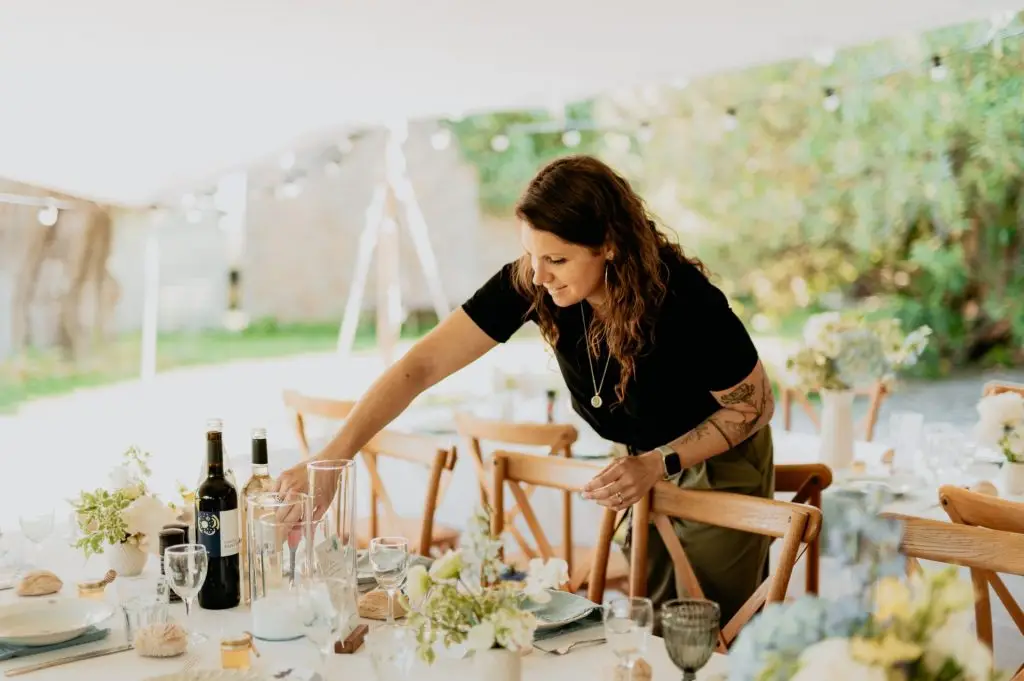
Vendor access and relationships: The best venues and vendors on the Riviera don’t market aggressively online. They work through relationships with local planners. A well-connected local planner opens doors that are simply not accessible through direct booking or international directories.
Language and negotiation: Contracts, vendor briefs, town hall communications, and day-of coordination all happen in French. A bilingual planner negotiates on your behalf, reads contracts in the original language, and handles every communication without information loss.
Logistics management: The Riviera is logistically dense — airport transfers, hotel room blocks, helicopter arrivals, yacht charters, fire safety permits, commune authorizations. A local planner knows which logistics require lead time of months, not weeks.
Legal navigation: If you pursue a French civil marriage, the paperwork is non-trivial. A local planner who has done this 30 times knows exactly which documents to obtain, in which order, and how to avoid the administrative delays that derail timelines.
On-the-day presence: Having someone on the ground who speaks the language, knows the vendors personally, and can solve problems in real time is worth more than any vendor substitution after the fact.
L&J Wedding Planner is based on the French Riviera and works exclusively with English-speaking international couples. From first venue shortlist to farewell brunch, every element is managed locally, in your language.
FAQ
Can foreigners legally get married on the French Riviera?
Yes — France allows foreigners to marry legally at a French mairie (town hall), but it requires residency establishment, specific documentation, and 10-day bans posting. Most international couples opt for a symbolic ceremony in France and marry legally at home. Full legal requirements guide
How far in advance should I book a Riviera wedding?
For peak season (July–August), 18–24 months is standard for top venues. Shoulder season (May–June, September) gives you more flexibility at 12–18 months. Last-minute (under 6 months) is possible for small, off-peak weddings.
Is the French Riviera more expensive than Tuscany or Santorini?
Generally yes — the Riviera commands a premium due to its real estate costs and high-season demand. Tuscany offers better value for rural estate weddings; Santorini is comparable or lower for mid-tier venues. The Riviera justifies the premium for couples who specifically want its combination of glamour, accessibility, and Mediterranean landscape.
What’s the most romantic area on the French Riviera for a wedding?
Subjective, but Èze and Cap d’Antibes consistently rank highest for sheer setting. For atmosphere and energy, Saint-Tropez. For practicality combined with beauty, Nice or Cannes.
Do I need a wedding planner for a Riviera wedding?
Not legally — but practically, yes. The combination of French administration, vendor ecosystem complexity, and language barrier makes a local planner close to essential for international couples. The planning fee is typically recovered in vendor pricing alone (planners negotiate rates you can’t access directly).