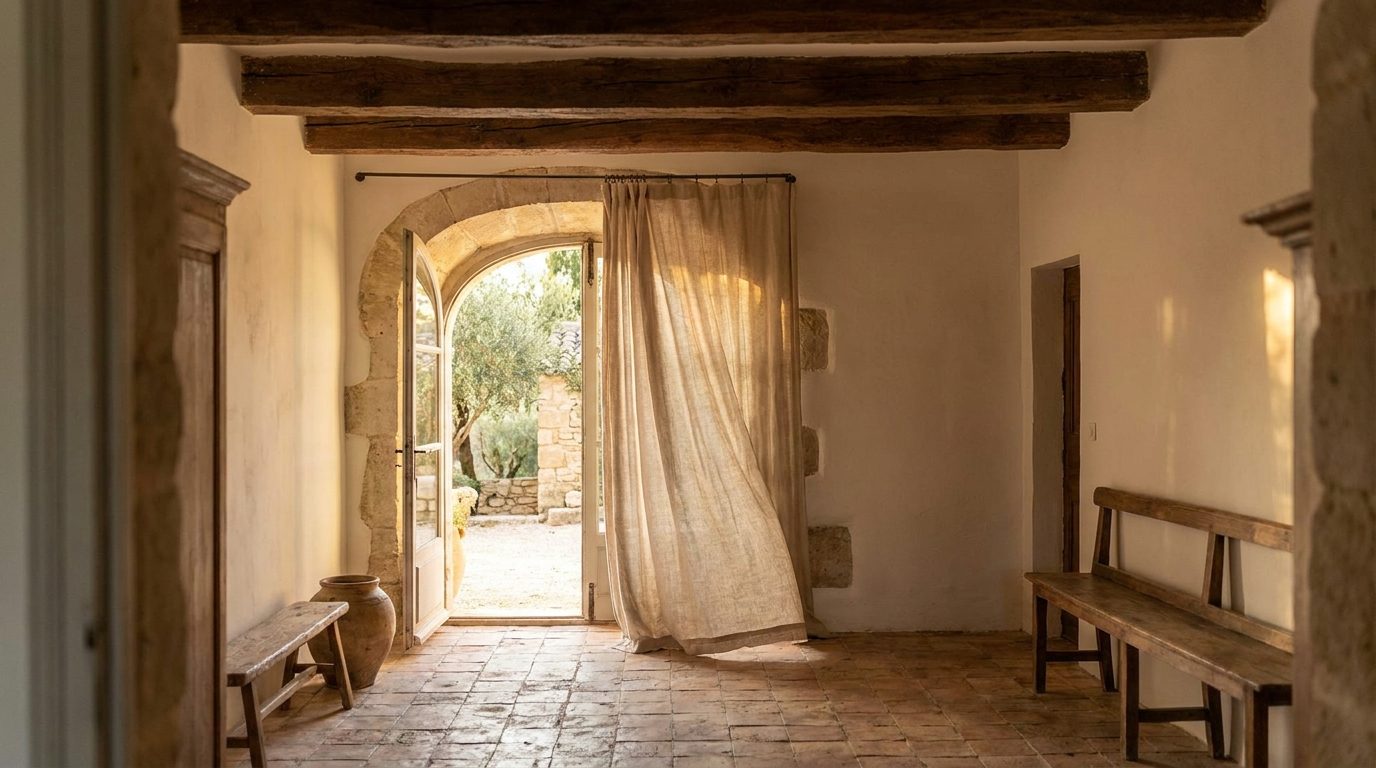
There’s a reason couples fly across the world to get married in Provence. It’s not just the landscape: it’s a complete sensory world. The warm weight of linen in summer heat. The sound of cicadas at dusk. The way golden light hits a stone wall at 7pm. The Provence wedding aesthetic isn’t a mood board trend. It’s a place, a season, a way of living, and the best weddings here know the difference.
This guide breaks down what that aesthetic actually looks like when done with intention: the colors, the materials, the flowers, the table, and, crucially, how to avoid the over-designed tourist version that misses the point entirely.
What the “Provence Aesthetic” Actually Means (Beyond the Lavender Cliché)
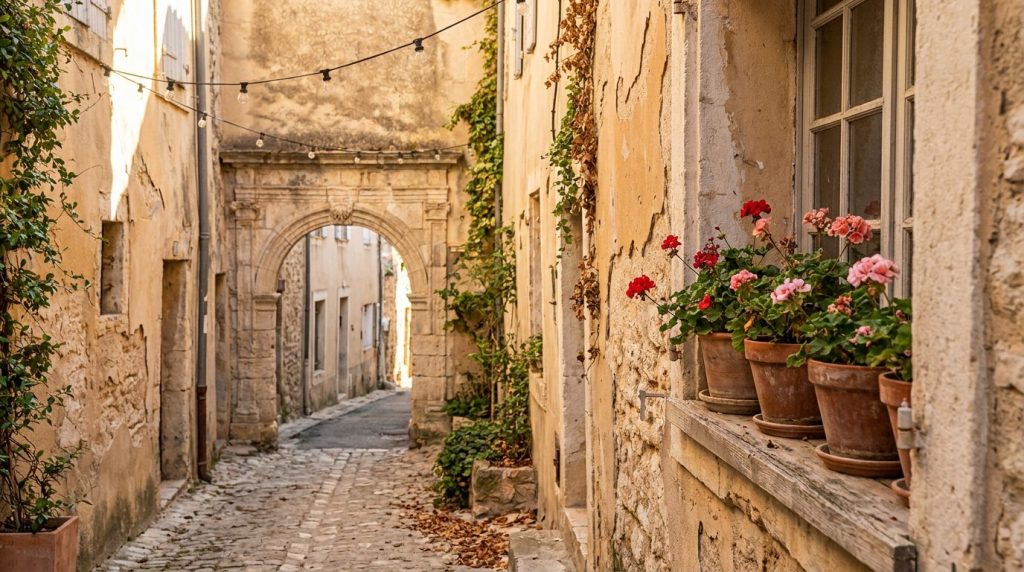
Ask Pinterest and you’ll get lavender fields and wicker baskets. That’s not wrong, but it’s surface-level. The real Provence aesthetic is rooted in restraintand terroir: the idea that what’s beautiful here was already here, grown from the soil, shaped by centuries of sun and wind.
Authentic Provençal style is:
- Unfussy. Nothing is over-decorated. The venue does the work.
- Natural. Materials are raw, aged, and honest. Stone hasn’t been sandblasted. Linen hasn’t been ironed flat.
- Slow. The aesthetic is inseparable from the art de vivre: the long dinner, the unhurried evening, the rosé that never runs out.
- Rooted in place. The flowers come from the garden. The olive trees are 200 years old. The clay pitchers came from a local market.
When couples tell us they want “Provence vibes,” what they’re really describing is this: beauty that doesn’t try. The skill, and this is where wedding design gets interesting, is creating that feeling intentionally, without manufacturing it.
The venues set the tone from the start. If you’re planning around this aesthetic, start with the right setting. bastide venues in Provence and mas wedding venues are the two venue types most naturally aligned with this world.
The Provence Color Palette: Ochre, Sage, Dusty Rose, Ivory, Terracotta
Provence has its own color language. These aren’t chosen from a swatch book: they come from the landscape itself.
The core palette:
- Ochre & warm gold: the color of stone walls, wheat fields, and dry earth. The backbone of everything.
- Sage & faded olive green: from the lavender stems, the olive trees, the wild thyme. Never a vivid green: always muted, silvery, dusty.
- Dusty rose & blush: not candy pink, but the soft, weathered rose of peonies at the end of their bloom, or old plaster walls.
- Ivory & ecru: linen tablecloths, unbleached cotton, aged paper. Never bright white: white reads as clinical and out of place.
- Terracotta & rust: from clay roof tiles, ceramic pots, and the red-orange soil of the Var. Grounding accent tones.
- Lavender & soft purple: yes, it belongs here, but as an accent, not the entire story.
What to avoid: Anything saturated or high-contrast. Bright white, electric blue, hot pink: all of these fight against the landscape instead of working with it.
For florals and table decor, this palette should feel like it could have been arranged by someone who simply walked through the garden and picked what was there. Which leads us to the next question: what is actually growing?
Textures and Materials: Stone, Linen, Rattan, Raw Wood, Wrought Iron
Provence is not a place for polished surfaces. Every material choice in a well-designed Provençal wedding should read as aged, natural, or handmade.
The essential materials:
- Stone: the venue itself, but also incorporated in styling: rough stone platters, slate place cards, marble from local quarries.
- Linen: the textile of Provence. Tablecloths, napkins, runners, always slightly rumpled, never pressed flat. The texture is the point.
- Rattan & wicker: chargers, baskets, lantern holders. Works best when it’s genuinely old or genuinely simple, not the polished boutique-hotel version.
- Raw wood: thick farm tables, wooden crates, bark-on branches as centerpiece bases.
- Wrought iron: candleholders, lantern hooks, chair backs. The local ironwork tradition runs deep; it never looks out of place.
- Terracotta: pots, pitchers, bowls. Unglazed, matte, slightly irregular.
- Glass: recycled, hand-blown, or intentionally imperfect. Not crystal.
What to avoid: Acrylic, metallics (gold in excess, mirrored surfaces), synthetic flowers, anything that looks like it came straight out of a box.
The overall effect should feel like you’ve sat down at someone’s home (a very beautiful, very old someone’s home) rather than a staged event.
Floral Inspiration for a Provençal Wedding
Provence is one of the most extraordinary places on earth for flowers. The challenge isn’t finding beauty: it’s choosing what not to use.
The garden approach: The most authentic Provençal florals look unstructured. Think gathered bunches rather than architectural arrangements. Flowers that lean, spill, and trail. Greenery that includes the stems and leaves, not just the blooms.
Seasonal stars:
- June–July: Peonies, ranunculus, sweet peas, lavender, chamomile
- July–August: Sunflowers, zinnias, wild fennel, dried grasses, olive branches
- September: Dahlias, cosmos, rosehips, late lavender, figs with leaves
The Provençal florist’s toolkit:
- Olive branches (for texture and movement, irreplaceable)
- Dried lavender (accent only, not the focal point)
- Rosemary sprigs tucked into napkins or boutonnieres
- Wildflower clusters in terracotta pots along the ceremony aisle
- Trailing greenery down the center of long tables
Working with the right florist is critical here. The aesthetic depends on someone who understands the terroir, not a florist who will deliver a generic romantic arrangement. Provence wedding florists who specialize in this style approach design the way a chef approaches a seasonal menu: what’s best right now, grown nearby, handled with care.
The Art of the French Wedding Dinner Table
If you understand one thing about Provence weddings, understand this: the table is everything. Not just as decor, but as experience. A Provençal wedding dinner is long. It starts before sunset and ends after midnight. It is the event.
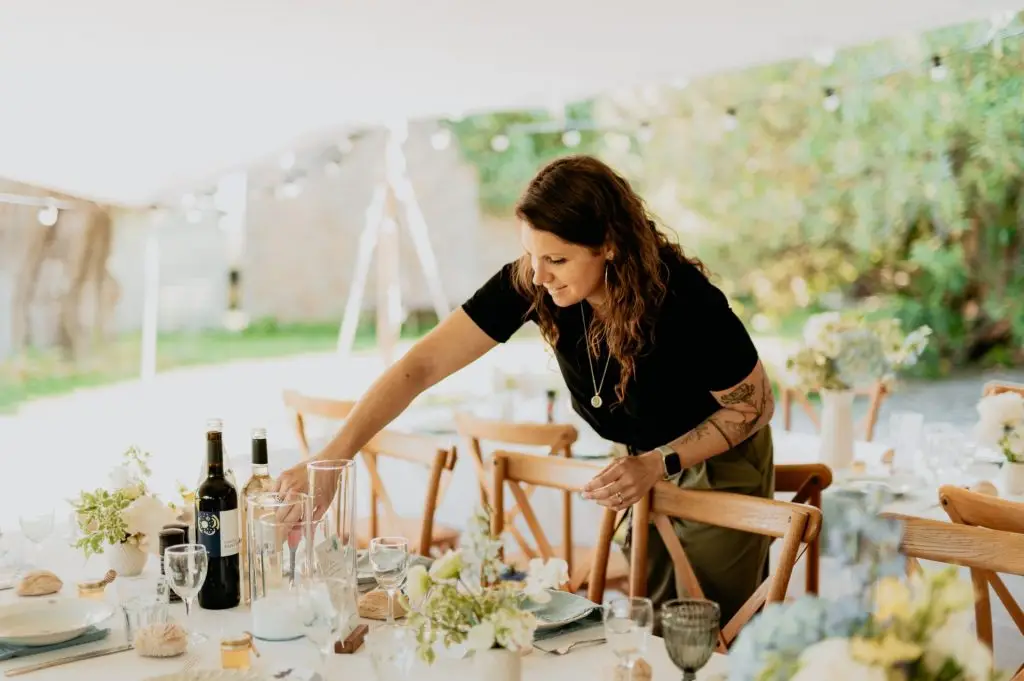
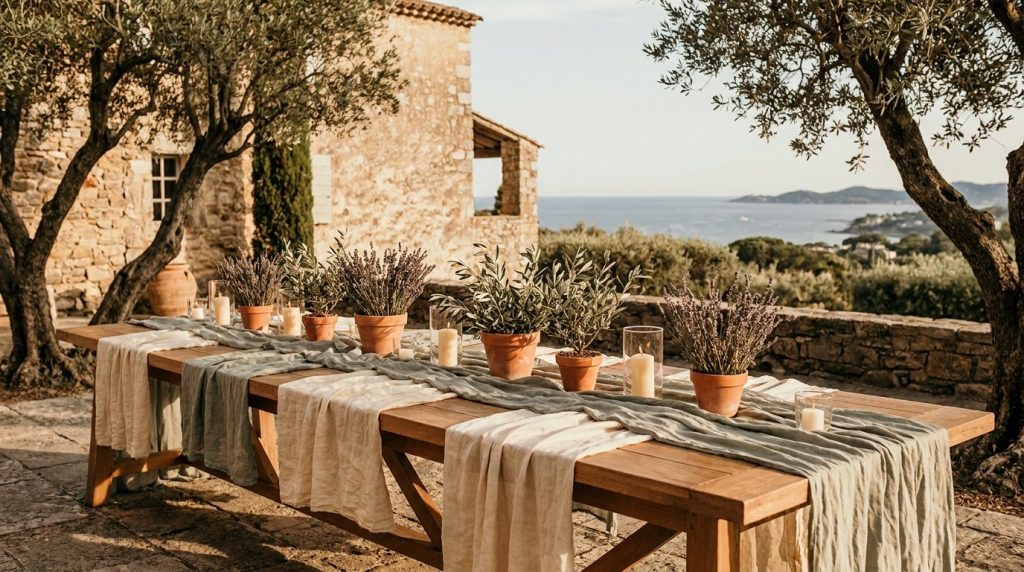
The long table: Forget round tables if the venue allows it. The long table d’hôte is the heart of any Provençal celebration: it brings everyone together, creates conversation across the table, and reads beautifully in photos. Wedding photographers in Provence will tell you: the long table at golden hour is one of the most photographed setups in the region.
Setting the scene:
- Mismatched vintage glassware (not uniform sets)
- Taper candles in wrought iron holders at varying heights
- No floral centerpieces above eye level, since conversation matters more than flowers
- Fresh herbs in small terracotta pots as table decor (guests take them home)
- Linen napkins tied with twine or a sprig of lavender, not folded into shapes
- Hand-lettered place cards on kraft paper or slate
The food as décor: In Provence, the table is the food. Sharing platters of local cheese, cured meats, olives, and produce arrive before the formal dinner: the aperitif is an event in itself. When the food is local and plentiful, it becomes part of the aesthetic.
The light: Everything changes at golden hour and into candlelight. Design your table for that light: warm tones, matte surfaces, nothing that glares.
How to Avoid the Tourist-Trap Version of Provence
Here’s the honest part. Provence has become a wedding destination trend, which means it’s also produced a lot of weddings that look like Provence without feeling like it. The signs:
- Lavender overload. Lavender is one element of many, not the entire concept.
- Tiffany chairs. Beautiful in other contexts; completely incongruous here.
- Fake patina. Distressed props that are obviously brand-new. Artificially “rustic” furniture.
- Over-floralled installations. Giant floral arches that overwhelm the natural architecture.
- Mismatched venue and aesthetic. A modern luxury hotel decorated to look rustic. The tension reads.
The antidote to all of this is the same: start with an authentic venue, work with local suppliers who are rooted in the region, and resist the urge to over-style. Provence is at its best when the design serves the place rather than replacing it.
The couples who get this right are usually the ones who’ve spent time here, or who’ve worked with a planner who knows the difference: someone who can walk you through a mas or bastide and say this wall, this light, this table position, and build everything else around that.
FAQ
What is the Provence wedding aesthetic?
The Provence wedding aesthetic is rooted in natural beauty, aged materials, and the region’s art de vivre. It centers on a warm, earthy color palette (ochre, sage, dusty rose, terracotta), natural textures (linen, stone, rattan, wrought iron), loose botanical florals, and long outdoor dinners, all shaped by the landscape and the unhurried pace of southern French life.
What colors work for a Provence wedding?
The most authentic Provence wedding palette uses ochre, sage green, dusty rose, ivory, terracotta, and muted lavender. These tones come directly from the landscape. Avoid high-contrast or saturated colors, and replace pure white with ivory or ecru for table linens and stationery.
What flowers are typical for a Provençal wedding?
Seasonal Provençal florals include peonies, ranunculus, lavender, olive branches, wild fennel, sunflowers, dahlias, and rosemary. The style is loose and unstructured: gathered bouquets rather than architectural arrangements, with herbs and wildflowers integrated throughout.
How do I avoid a generic “Provence-inspired” wedding?
Start with a genuinely authentic venue: a bastide or a mas rather than a modern hotel. Work with local suppliers who understand the terroir. Resist over-styling: the architecture and landscape should do most of the visual work. And remember that lavender is one accent in a much larger palette, not the entire concept.
What table setup is typical for a Provence wedding?
Long farm tables, linen runners, mismatched vintage glassware, taper candles, and low floral arrangements. The table is designed for a long evening of conversation: everything serves comfort and atmosphere, not visual spectacle.
Conclusion
The Provence wedding aesthetic isn’t a style to import: it’s a place to inhabit. When it works, you barely notice the design choices; you just feel the warmth of the stone, the weight of the linen, the rightness of the light. That’s the goal.
Ready to bring this vision to life? Let’s design your wedding together.