There are beautiful wedding venues, and then there are venues that feel like they belong to you, places where the walls have absorbed centuries of sunlight, where lavender grows wild at the edges of the courtyard, and where the silence between toasts is filled only by cicadas. In Provence, that place is usually a mas.
If you’ve been researching Provençal wedding venues and keep encountering the word mas without quite knowing what it means or how it differs from a bastide or château, this guide is for you. Here’s everything you need to know about the mas: its origins, its architecture, what it offers for a wedding, and whether it’s the right fit for yours.
Planning from abroad? L&J Wedding Planner plans destination weddings across Provence. See Michelle & Laurent’s wedding at Château Saint-Esprit for a real example.
What Is a Mas?
A mas (pronounced “mah”, from the Latin mansus, meaning dwelling) is a traditional Provençal farmhouse, the quintessential rural home of southern France. Unlike a bastide, which was built as an elegant country retreat for the bourgeoisie, a mas was a working farm: a place built around agriculture, livestock, and the rhythms of the land.
Architecture and Character
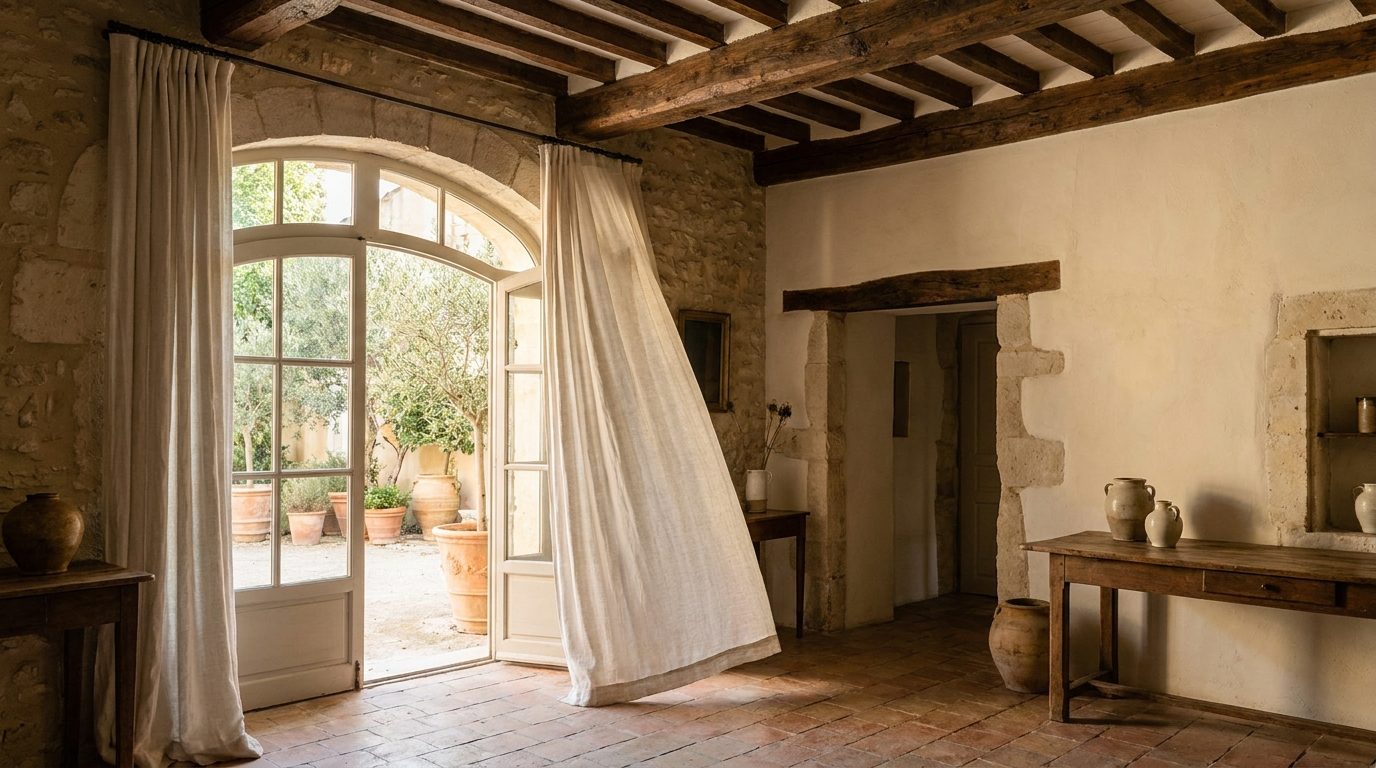
Mas architecture is defined by function as much as beauty. These buildings evolved organically over generations, which gives them a layered, unplanned quality that no architect could replicate. Typical features include:
- Rough-cut stone walls in warm ochre, beige, or grey, often with visible coursing and hand-set lintels
- Low, compact silhouettes : mas buildings hug the ground, turned away from the north to shelter from the Mistral wind
- Small, deep-set windows with painted timber shutters, designed to keep interiors cool in summer
- Covered calade courtyards : paved in river stones, often with a central well, a fig tree, or a stone table that has clearly been used for decades
- Outbuildings and bergeries (sheep barns) that have been converted into dining rooms, ceremony spaces, or gîtes
- Potager gardens and herb terraces that feel genuinely lived-in, not landscaped for show
What makes a mas immediately different from its grander cousin the bastide is the absence of pretension. A mas doesn’t try to impress you. It absorbs you.
Cultural and Historical Roots
Mas farms were the backbone of the Provençal economy for centuries. They raised silkworms, cultivated olives and almonds, kept sheep on the garrigue, and produced wine long before AOC classifications existed. Many mas properties in the Luberon, the Alpilles, and the Var date back to the 16th or 17th century, though the agricultural structures around them are often older still.
When Parisian intellectuals and artists began discovering Provence in the early 20th century, Picasso in Mougins, Cocteau in Milly, Camus in Lourmarin, it was the mas they fell in love with. Not the château. The mas. Because it felt real.
That authenticity is exactly what couples seek when they choose a mas for their wedding.
What Makes a Mas Setting So Special for a Wedding
A mas doesn’t offer the architectural grandeur of a château or the formal symmetry of a bastide. What it offers instead is something harder to manufacture: a sense that your wedding is happening inside a living place, not a stage set.
Intimacy built into the architecture. Courtyards, low archways, stone passages between buildings, a mas naturally creates a sense of enclosure and privacy. Guests gather rather than disperse. The space holds people together.
Texture that photographs cannot capture but guests feel instantly. The worn stone underfoot, the wooden beams overhead, the uneven windowsill where someone rested their glass, these are not design choices. They are the accumulation of centuries, and they give a mas wedding a quality of rootedness that no amount of interior styling can replicate.
The surrounding landscape as a participant. Mas properties in Provence are rarely isolated architectural objects. They sit within their land: olive groves, lavender fields, vineyard rows, dry-stone walls separating pasture from garrigue. The setting is not a backdrop, it is part of the atmosphere.
Genuine exclusivity. Most mas properties that host weddings do so as a full-property rental. You’re not booking a venue; you’re borrowing a home. That changes everything about how a wedding feels, for you and for your guests.
Best Mas Wedding Venues in Provence
Mas de la Fouque, Camargue-Provence border
On the edge of the Camargue, surrounded by rice paddies, pink flamingos, and the vast emptiness of the Rhône delta, Mas de la Fouque is unlike anything else in the region. The property has been elegantly restored while retaining its raw Camargue character: exposed stone, water views, and a wildness that makes photographs genuinely extraordinary.
- Capacity: Up to 80 guests for exclusive events
- Signature feature: Flamingo-inhabited wetlands as ceremony backdrop; boat excursions for guests
- Accommodation: 26 rooms and suites
Mas de Baraquet, Gard (near Uzès)
A beautifully restored 17th-century mas in the garrigue between Uzès and Nîmes. The property has been in the same family for generations and retains an authenticity that’s increasingly rare. Dry-stone walls, ancient olive trees, a calade courtyard with a stone fountain, and a view over open countryside that belongs on a painting.
- Capacity: 30–80 guests
- Signature feature: Multi-generational family property; fully private buyout including gîte accommodation
- Accommodation: Multiple gîtes sleeping up to 30 guests on-site
Mas des Herbes Blanches, Luberon (Joucas)
A refined Relais & Châteaux property perched above the Luberon valley with panoramic views stretching to the Ventoux. The mas has been converted into a boutique hotel without losing its Provençal soul: terracotta floors, exposed stone, a swimming pool integrated into the terraced gardens.
- Capacity: Up to 80 guests for exclusive buyout
- Signature feature: Infinity pool terrace overlooking the Luberon; full Relais & Châteaux service
- Accommodation: 22 rooms available for full buyout
Mas de la Croix d’Arles, Alpilles
Set among olive groves and almond trees in the heart of the Alpilles, this working mas combines a genuine agricultural identity (they produce their own olive oil) with a beautifully curated aesthetic. The stone courtyard, the shaded terrace, and the wild Alpilles garrigue surrounding the property create a ceremony environment that is profoundly, unmistakably Provençal.
- Capacity: 20–70 guests
- Signature feature: Working olive farm; harvest ceremonies possible in autumn
- Accommodation: On-site chambres d’hôtes for the wedding party
Mas de Peint, Camargue
A legendary property in the Camargue, Mas de Peint is a working bull and horse farm turned intimate hotel. The owner-hosts have maintained everything that makes a Camargue mas extraordinary, raw stone, ancient timbers, wild horses visible from the windows, while adding the kind of considered comfort that allows guests to feel genuinely at ease. Availability is limited and early.
- Capacity: Up to 40 guests for exclusive events
- Signature feature: Camargue white horses on the property; utterly singular atmosphere
- Accommodation: 11 rooms and suites for full buyout
Mas vs. Bastide vs. Château – Which One Fits Your Vision?
Choosing between a mas, a bastide, and a château is ultimately a question of what you want your wedding to feel like. The budget difference is real but secondary, what matters more is atmosphere.
| Mas | Bastide | Château | |
|---|---|---|---|
| Character | Rural, raw, deeply authentic | Elegant, warm, bourgeois | Grand, formal, aristocratic |
| Architecture | Organic, asymmetric, agricultural | Symmetrical, curated, garden-formal | Monumental, historic, designed to impress |
| Scale | Intimate (20–100 guests) | Medium (30–150 guests) | Large (100–500+ guests) |
| Setting | Fields, olive groves, garrigue | Gardens, allées, fountains | Parkland, moats, towers |
| Atmosphere | “We’re in someone’s home” | “We’re in a refined Provençal estate” | “We’re in a palace” |
| Best for | Intimate, nature-forward, unfussy | Elegant destination weddings with local soul | Grand celebrations, large guest lists |
A mas is the right choice if you want guests to feel the South of France in their bones, not just see it in the view. It suits couples who prioritize authenticity over polish, intimacy over grandeur, and a living landscape over a manicured one.
If you want the refinement of a formal Provençal garden with a more symmetrical, elegant architectural frame, a bastide is likely closer to your vision.
What Guest Counts Work Best for a Mas
The mas is inherently an intimate venue format. This is not a limitation, it is a feature.
The sweet spot: 30–80 guests. At this scale, a mas works perfectly. The courtyard holds a ceremony, the terrace seats everyone for dinner, and the stone walls create natural acoustic intimacy. Guests are close enough to feel the energy of the room without the need for sound amplification.
Smaller celebrations: 20–40 guests. Some mas properties are genuinely sized for micro-weddings or elopements. The property becomes more of a house than a venue, closer to hosting your closest people for a long weekend than organizing a wedding event. This is increasingly popular with couples who want something deeply personal.
Larger gatherings: up to 100 guests. Some mas properties, particularly those with converted outbuildings or large terraces, can accommodate up to 100 guests comfortably. Beyond this, the character of the mas tends to get diluted. The intimacy that makes it special requires a certain scale ceiling.
What doesn’t work: 150+ guest weddings at a genuine mas. The architecture isn’t designed for it, and the logistics become difficult. If your guest list is over 120, a bastide or domaine-style estate will serve you better.
On-site accommodation. Most mas properties have limited on-site accommodation, typically 5 to 20 rooms, enough for the wedding party and close family. Guests staying elsewhere in nearby villages is the norm, and often part of the pleasure: it gives everyone a reason to explore.
FAQ
What does “mas” mean in French?
Mas is an Old Provençal word derived from the Latin mansus, meaning “dwelling.” It refers specifically to a traditional Provençal farmhouse, distinct from other country houses by its agricultural origins and rustic architectural character.
Is a mas more affordable than a château for a wedding?
Not necessarily. While a mas is often smaller, exclusive buyout pricing can be similar to a bastide or mid-range château, especially at sought-after properties. The difference is in what you get for the price: intimacy and authenticity rather than grandeur and formal gardens.
Can you have an outdoor ceremony at a mas?
Almost always, yes. Most mas properties have a courtyard, garden, or olive grove ideally suited for outdoor ceremonies. The mas setting is particularly beautiful in late afternoon light when the stone walls warm to gold. Weather backup options (a converted barn or installed tent) should always be confirmed.
How is a mas different from a gîte?
A gîte is a self-catering holiday rental, it can be a mas, a bastide, a mill, or any rural property. A mas is a specific architectural type. When couples rent a mas for a wedding, they’re typically renting the whole property (including accommodation) on an exclusive basis, often with event services included or coordinated through a planner.
Do mas venues in Provence allow outside caterers?
Many do, though some have preferred caterer lists or an in-house catering partner. This is always worth confirming early in your venue search, particularly if you have a specific culinary vision or a caterer you’ve already committed to.
Let L&J Find Your Perfect Mas
A mas wedding in Provence is not a decision you make from a brochure. The best mas properties aren’t always the ones with the most striking website, they’re the ones with a courtyard that makes you exhale the moment you step through the gate, or an olive grove where the light does something extraordinary at six in the evening.
Let L&J find the perfect mas for your vision, we know the hidden gems.
We know which ones have the authentic soul couples are looking for, which ones have converted beautifully, and which ones are perhaps better in photographs than in person. Our job is to match you to the place that will make your wedding feel like it could only have happened there.